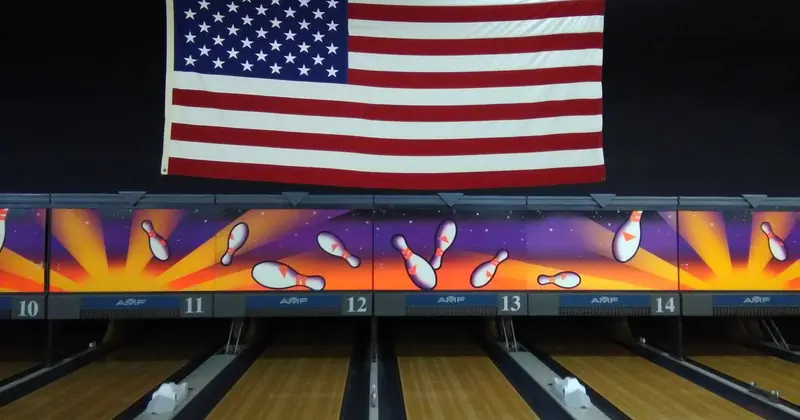
Who here thinks their bowling ball takes a little vacation before it comes back?
I ask that at the front desk sometimes. People laugh. Then I tell them the truth. Your ball does go on a trip. It just doesn't stay gone long.
Have you ever stopped to think about where your ball goes after it hits the pins? It doesn't simply turn around and come back. It travels through a whole return system that carries it back to you, ready for your next shot. We have 24 lanes at Albany Strikers, and that trip happens on every one of them, every frame, all night long.
Here is the route.
Stop one: the pit
Your ball hits the pins and keeps going. At the back of the lane it runs into a heavy padded curtain called the pit cushion. That stops it and drops it into the pit, right there with all the pins you just knocked down.
Now the machine has a problem. The pins need to go one way. Your ball needs to go another.
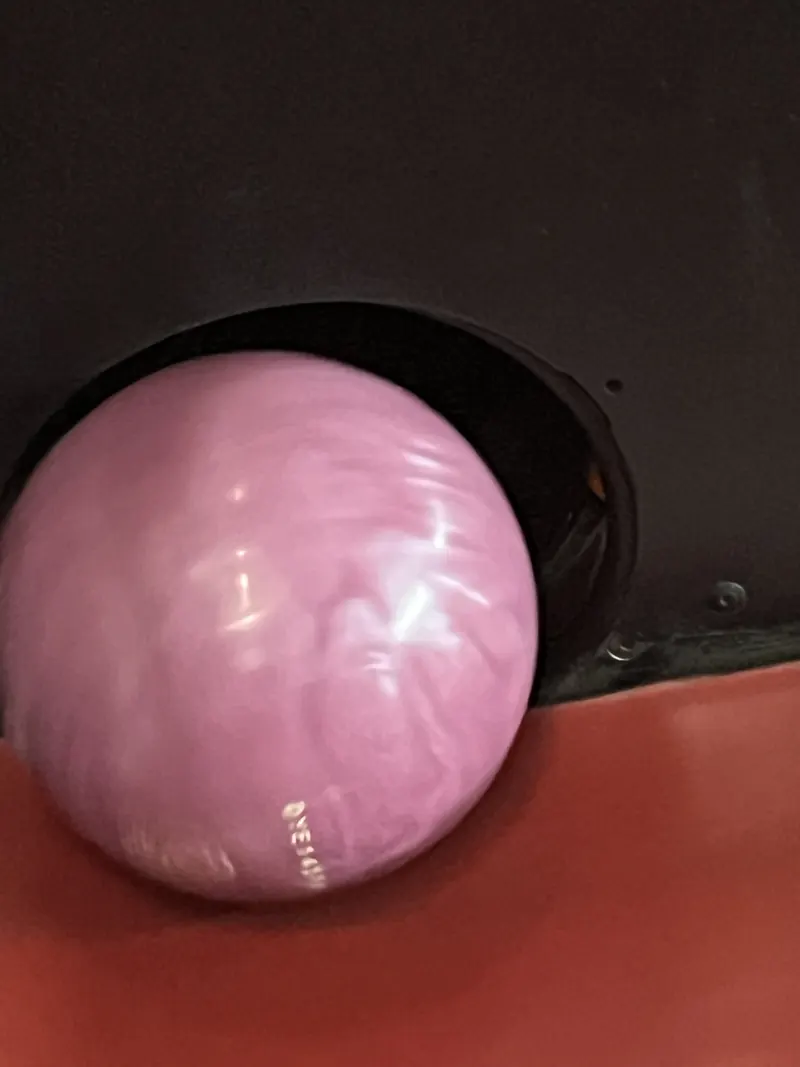
Here is the trick. There is a gap under the cushion. A pin lying on its side fits through it. Your ball does not. So the pins get carried back toward the pinsetter, and your ball rolls off to the side, toward a small door that only a ball can get through.
Stop two: the lift
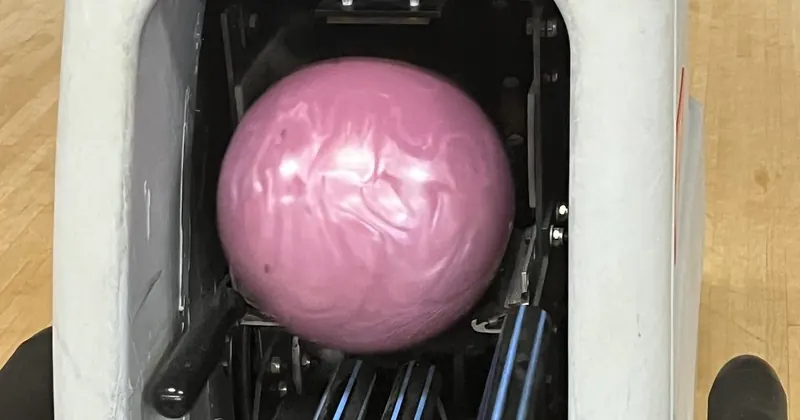
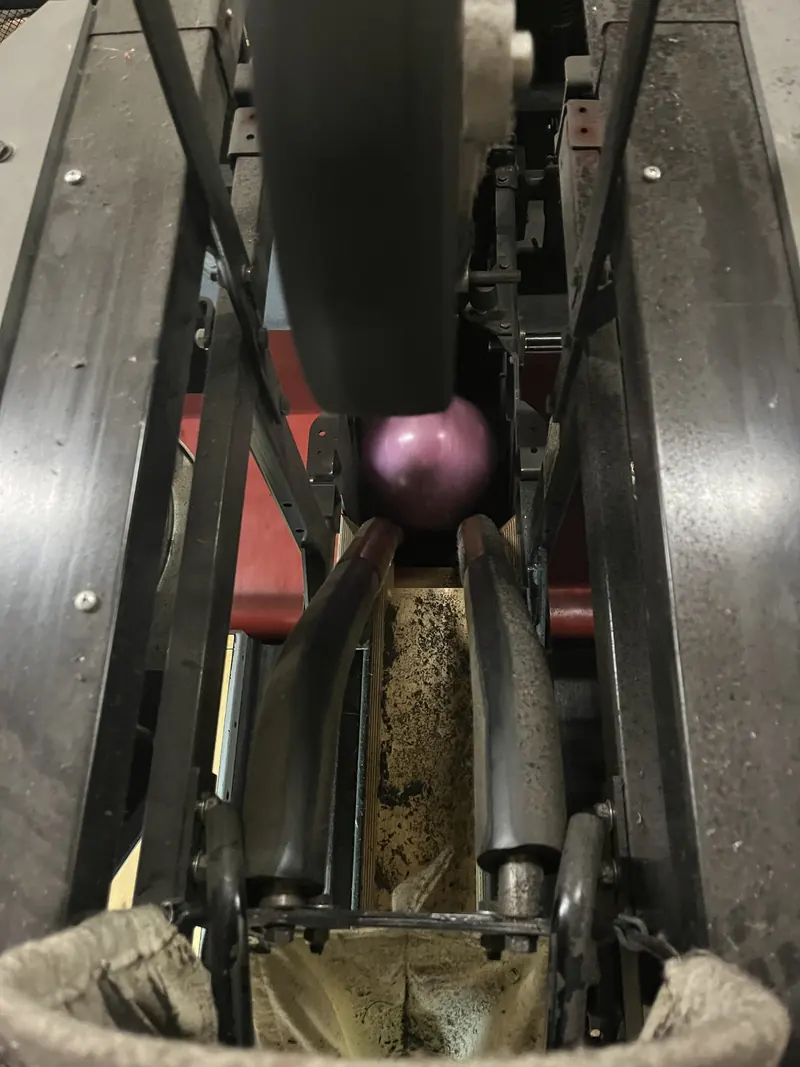
On the other side of that door, a turning wheel catches the ball and rolls it up between two rails. That is the picture below, taken from inside the machine looking down. The ball rides up, tips over the top, and drops onto a track.
Then it gets a push. A belt gives it a good shove, and off it goes.
Stop three: under the lanes
This is the part nobody sees. The track runs underneath the floor, between two lanes, all the way back to where you are standing. A regulation lane is 60 feet from the foul line to the head pin. Your ball covers about that same distance again, underground, on its way home.
That is also why every two lanes share one ball return. The track runs right down the middle between them. Balls from both lanes ride the same rails and come up at the same rack.
Stop four: back to you
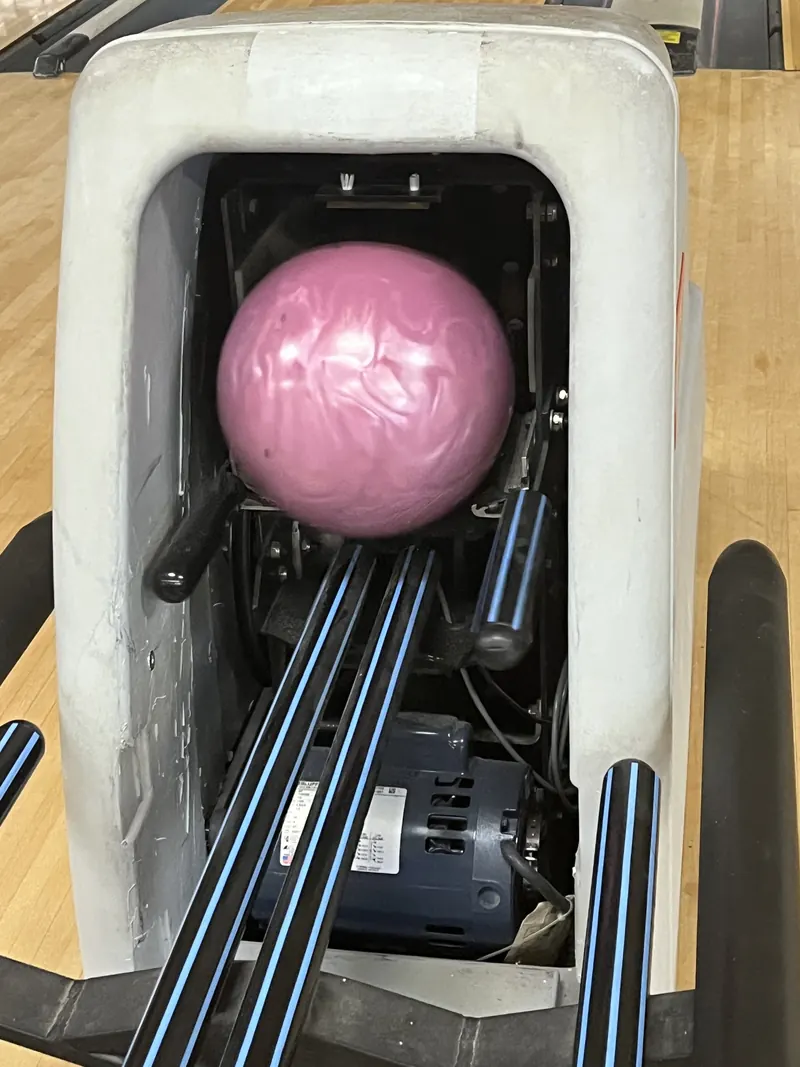
When the ball reaches the front, it is still below the floor. It has to climb. Inside the hood, the rounded cover you see by the approach, a motor and a lift push it up and out. From there, gravity does the rest. It rolls down the rack and stops in front of you.
Pit. Lift. Tunnel. Climb. A few seconds. Then you pick it up and do it again.
When a ball doesn't come back
Once in a while, a ball does not show up. Most of the time a pin got stuck in that little door at the pit and blocked the way. Do not walk down the lane after it. Never go past the foul line. Come let us know at the front desk and our team will take care of it. It happens. It is part of running 24 lanes.
The hardest working part of the building
I think the ball return is the most underrated thing we have. Everybody notices the pins. Everybody watches the scoreboard. Nobody thanks the ball return. Without it, you would be walking 60 feet to get your ball back after every shot.
If you read What Happens Behind the Pins, you already know about the pinsetter. This is the other half of that machine. One part takes care of the pins. This part takes care of your ball.
This is the first piece in a series I am calling The Secret Life of a Bowling Ball. There is more to the story, and I will keep telling it.
Watch it for yourself
Next time you bowl, throw your shot and then watch the ball return. Count how long it takes. Listen for it coming up through the hood. Bring the kids and ask them where they think the ball went.
Reserve a lane, or just come by 1200 West Broad Avenue. I will see you at the lanes.
Edgar
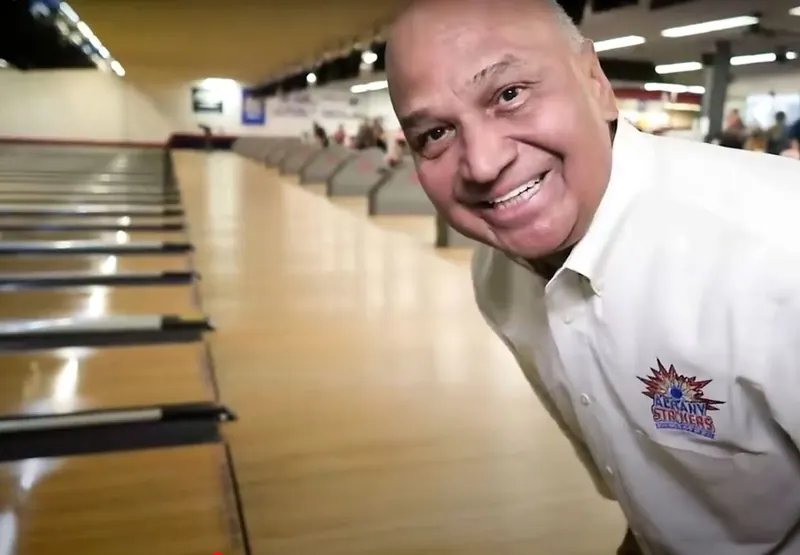
Edgar JustavinoOwner of Albany Strikers and a retired Navy veteran.